Overview
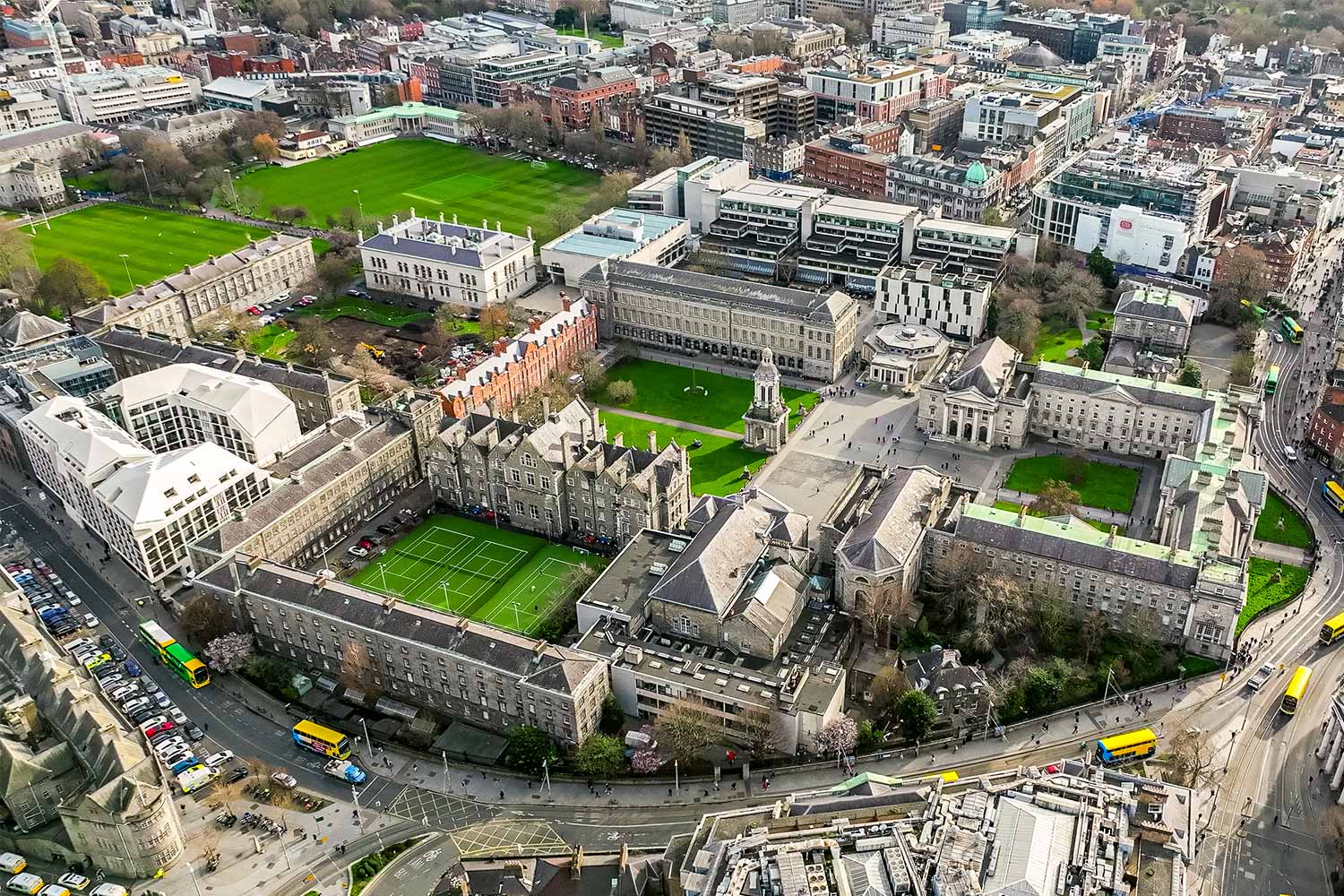
Trinity College Dublin (formally Trinity College Dublin, the University of Dublin) is Ireland’s leading comprehensive research university and one of the most historically prestigious institutions in Europe. Located in the heart of Dublin, it is especially strong in the humanities, social sciences, business, law, engineering, science, and health sciences.
History
Trinity College Dublin was created by royal charter in 1592 on the site of the former Priory of All Hallows in Dublin. As Ireland’s oldest and most internationally prominent university, Trinity has developed a long tradition of academic freedom, independent inquiry, and interdisciplinary scholarship.
Notable Alumni
Trinity has educated and been associated with many world-famous writers, scientists, thinkers, and public figures, including Oscar Wilde, Samuel Beckett, Ernest Walton, William Rowan Hamilton, Edmund Burke, and former President of Ireland and former UN High Commissioner for Refugees Mary Robinson. The university has had lasting influence in literature, science, political thought, and public life.
Strong Academic Fields
Trinity is particularly strong in literature, history, philosophy, languages, business, economics, law, engineering, computer science, mathematics, physics, life sciences, medicine, and health sciences. It combines a strong humanistic tradition with major research strength in science and technology.
Academic Structure
According to the university’s official overview, Trinity teaches and conducts research across the major disciplines in the arts and humanities, business, law, engineering, science, and health sciences. It offers a full range of undergraduate, postgraduate, and doctoral programmes, supported by departments, schools, and interdisciplinary research centres.
Distinctive Features
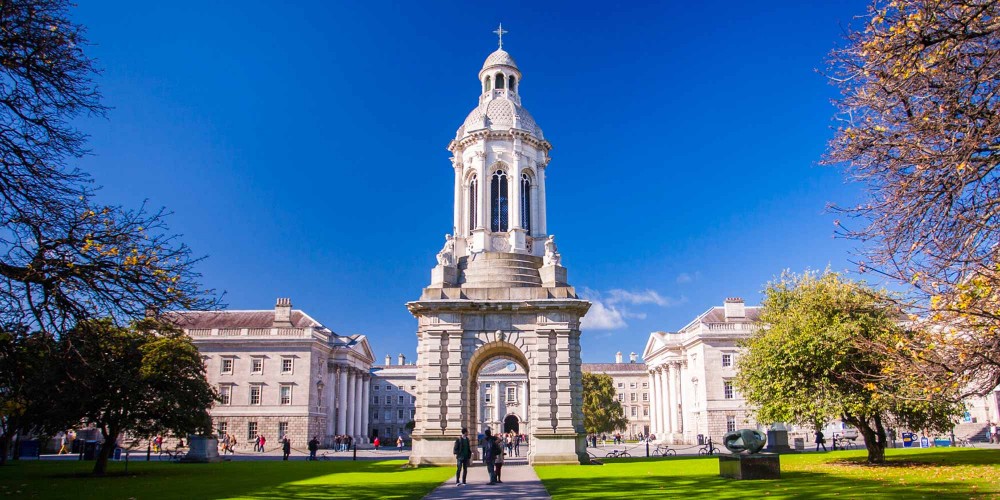
Trinity stands out for its historic campus, central Dublin location, and strong tradition of independent intellectual inquiry. The university explicitly emphasizes independence of thought, diversity, interdisciplinarity, and an inclusive academic environment. For students, Trinity offers a rare combination of historic prestige, urban international opportunities, and high-quality research infrastructure.
Admissions
For international applicants, Trinity provides a dedicated International Applicants portal with country- and region-specific academic and English-language requirements, along with guidance on visas, scholarships, and fees. Non-EU undergraduate applicants are generally expected to hold a school-leaving qualification equivalent to the Irish Leaving Certificate and to meet general matriculation requirements, including English, mathematics, and a language other than English. Postgraduate admissions requirements vary by programme and are listed on individual course pages.