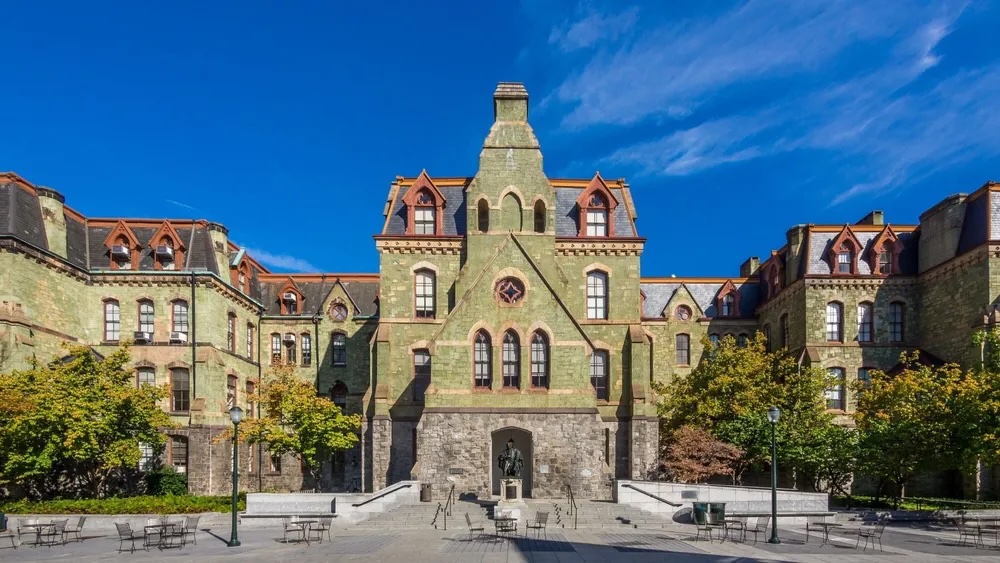
In July of 1778, what is now known as the University of Pennsylvania was known as something a bit different: the capital of the United States. This stint as the nation’s political center during the Revolutionary War is just one of the many episodes in Penn’s storied history. It is not only one of America’s first colleges, but also the first university offering both undergraduate and graduate education (a status gained with the founding of the first medical school in the country in 1765). Penn’s alumni include billionaire entrepreneur Elon Musk, famed suffragette Alice Paul, recording artist John Legend, and former President Donald Trump. Faculty at Penn have included civil rights icon W. E. B. Du Bois, Pulitzer Prize-winning composer George Crumb, and President Joe Biden.
In addition, Penn offers seven specialized dual-degree and interdisciplinary programs: The Jerome Fisher Program in Management and Technology (M & T) (a B.S. in Economics from The Wharton School and either a BSE in Engineering or a BAS in Engineering from Penn Engineering), the Huntsman Program in International Studies and Business (a B.A. in International Studies from the School of Arts and Sciences and a B.S. in Economics from The Wharton School), Nursing and Health Care Management (a B.S. from Penn Nursing Science and a B.S. in Economics from The Wharton School), the Roy and Diana Vagelos Program in Life Sciences and Management (LSM) (a B.S. in Economics from The Wharton School and a B.A. from the College of Arts & Sciences in a life science discipline), the Vagelos Integrated Program in Energy Research (VIPER) (a bachelor’s degree from the College of Arts and Sciences and the School of Engineering and Applied Science), the Computer and Cognitive Science Program (B.A. from the College of Arts and Sciences and either a BSE in Engineering or a BAS in Engineering from Penn Engineering), and the Accelerated 7 year Bio-Dental Program (a bachelor’s degree plus a dental degree from Penn Dental Medicine).
Student life on campus accounts for some of the liveliest in the Ivy League with a multitude of performing arts, comedy, Greek, affinity, and academic organizations. The Philomathean Society (founded in 1813), a collegiate literary society, is the oldest student group on campus, and one of the oldest literary societies in the country. Organizations such as the Glee Club, Penn Band, and the Mask and Wig Club are also some of the oldest and most renowned undergraduate organizations in the country. Penn is known for the strength of its LGBTQ+ community and history of queer activism. Additionally, athletics have a strong presence on campus with many teams taking home Ivy League championships, and in the case of the men’s and women’s fencing teams, national championships.
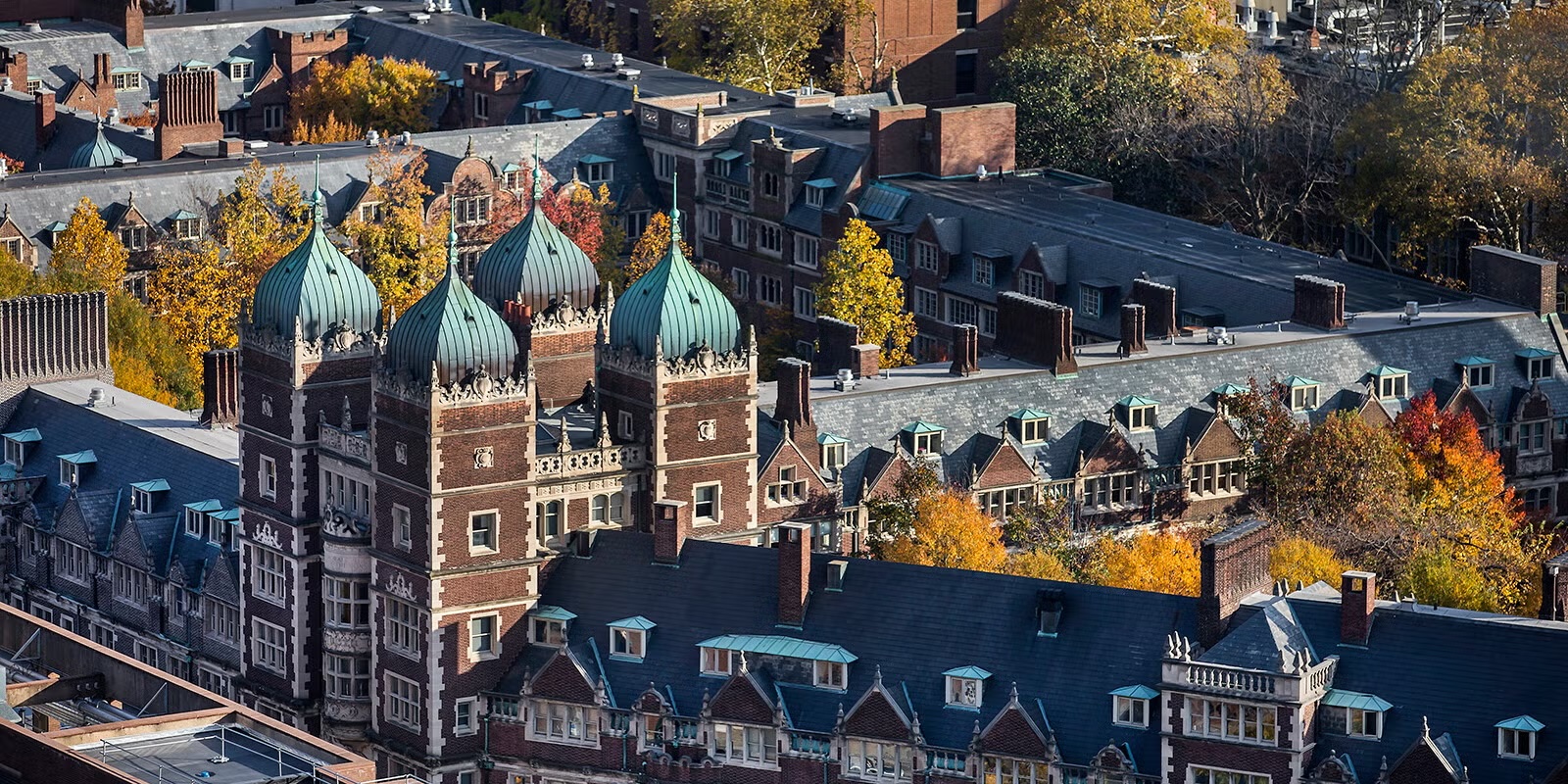
Today, the University of Pennsylvania is regarded as one of the best universities in the world, educating civically-minded world leaders on a West Philadelphia campus known for its physical beauty, public art installations, and proximity to many historical neighborhoods in the greater city area. Penn received about $1.6 billion in research funding in 2021, the highest in the Ivy League. Those with entrepreneurial, cultural, and scientific ambitions turn to Penn to be on the cutting edge of many fields.
While it has historically been one of the less competitive Ivies when it comes to admissions, Penn has followed a recent trend of increasingly competitive cycles that demand more and more from applicants. For the Class of 2027, Penn received a record 59,465 applications, but only admitted 3,474, for an acceptance rate of 5.84%, the lowest in the school’s history. According to their admissions office, Penn looks for candidates who “emulate our founder Benjamin Franklin by applying their knowledge in ’service to society’ to our community, the city of Philadelphia, and the wider world.” Demonstrating this level of civic commitment on the application is no small feat, so New Ivies is happy to help you with this process!